
What is Brutalist Typography? The Raw Aesthetic Trend
In the polished world of modern digital design, where sleek minimalism and “user-friendly” gradients reign supreme, a jarring rebel has emerged: Brutalist Typography.
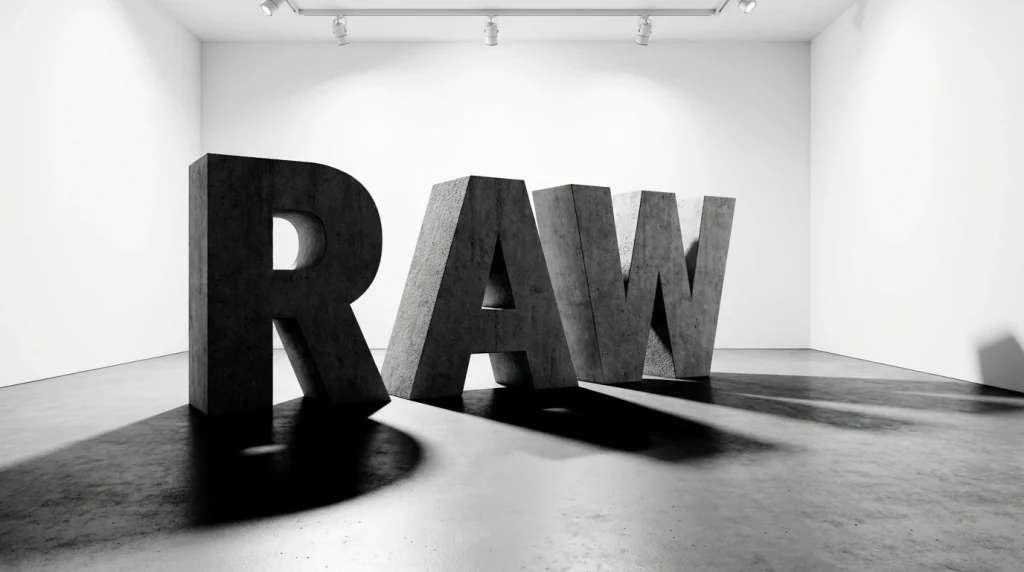
Characterized by its oversized scales, lack of hierarchy, and intentional “ugliness,” this trend is a visual protest against the sterile perfection of contemporary web interfaces. It doesn’t ask for your attention; it demands it through sheer physical presence and raw, unrefined energy.
The Origins of the Brutalist Aesthetic
To understand typography in this context, we must first look at its architectural namesake. Brutalism originated in the 1950s architectural movement (derived from the French béton brut, or “raw concrete”). It was defined by massive, monolithic structures that exposed their building materials rather than hiding them behind decorative facades.
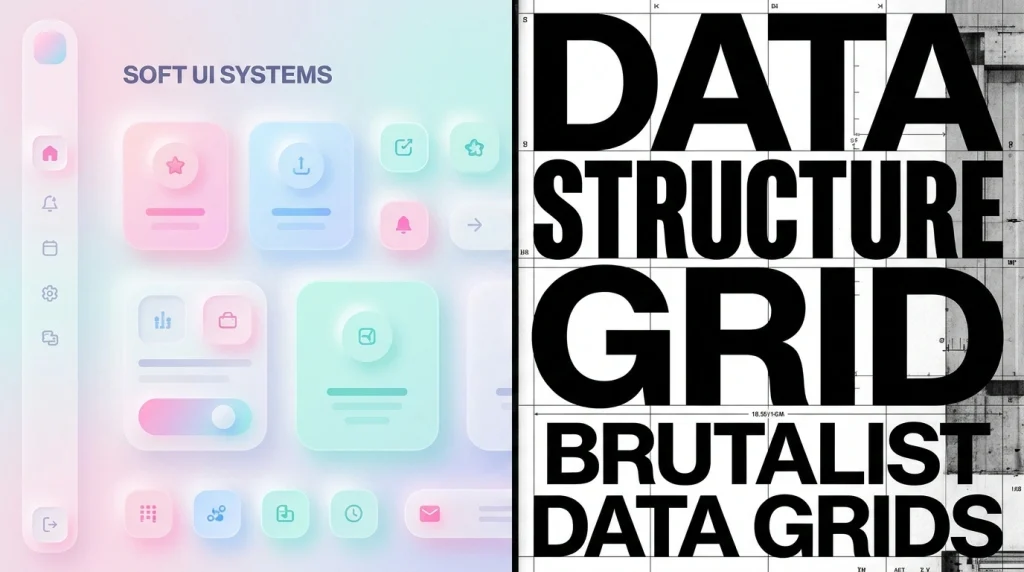
In the digital realm, Brutalism translates to “honesty.” It strips away the shadows, the rounded corners, and the gentle transitions. Instead, it presents the “bones” of the design. Brutalist Typography is the voice of this movement—loud, heavy, and intentionally unpolished. It mimics the early days of the internet when HTML was raw and CSS was a luxury, but it does so with a modern, sophisticated edge.
Defining Characteristics of Brutalist Typography
What makes a font “brutalist”? It isn’t necessarily about the specific typeface, but rather how that typeface is deployed within a layout.
- Monospaced and Sans-Serifs: There is a heavy preference for “utilitarian” fonts. Monospaced typefaces (like Courier) and heavy grotesque sans-serifs (like Impact) are standard staples.
- Massive Scale: One of the most recognizable traits is the use of hero text that spans the entire width of the screen. Letters often overlap or bleed off the edges.
- Extreme Weight: Thin, elegant lines are traded for “extra-bold” or “black” weights. The goal is to create a sense of heaviness and permanence.
Why “Anti-Design” is Taking Over
You might wonder why a brand would choose a style that is intentionally difficult to read. The answer lies in authenticity. In an era of “cookie-cutter” templates, Brutalism feels human because it feels flawed.
Breaking the Grid
Most websites follow a predictable pattern. Brutalism breaks the grid, forcing users to truly focus on the content.
Cultural Commentary
It reflects a DIY, punk-rock ethos, signaling that a brand is a “disruptor” in their industry.
How to Implement Without Breaking UX
While the aesthetic is “raw,” you still want your audience to stay on your page. Here is how to balance the trend with usability:
Use Typography as the Hero
In Brutalism, the text is the image. Instead of using a high-resolution photograph for your header, use a massive, bold heading that fills the space. This creates a striking visual impact without the need for additional graphics.
Maintain Functional Navigation
You can be experimental with your headers, but keep your navigation and “Call to Action” buttons clear. A common technique is to use a chaotic style for titles, while keeping body text in a highly legible, standard font aesthetics.
Conclusion
**Brutalist Typography** is more than just a stylistic choice; it is a philosophy of transparency and bold communication. By ditching the decorative and embracing the raw, designers can create experiences that are memorable, high-impact, and undeniably authentic. Whether you love it or hate it, Brutalism ensures that your message won’t be ignored.